Retail display brackets in brand teal
Four hundred steel brackets for a regional outdoor retailer, matched to their brand color from a physical chip. Two production lots, held to ΔE ≤ 1.5 against the approved sample.
Candy metallics, hand-rubbed veins, hammertones, wrinkles, iridescents, and any color you can hand us — matched from RAL, Pantone, OE codes, or a photo. Prototypes, one-offs, and short production runs with the same pretreat and cure as our biggest jobs.
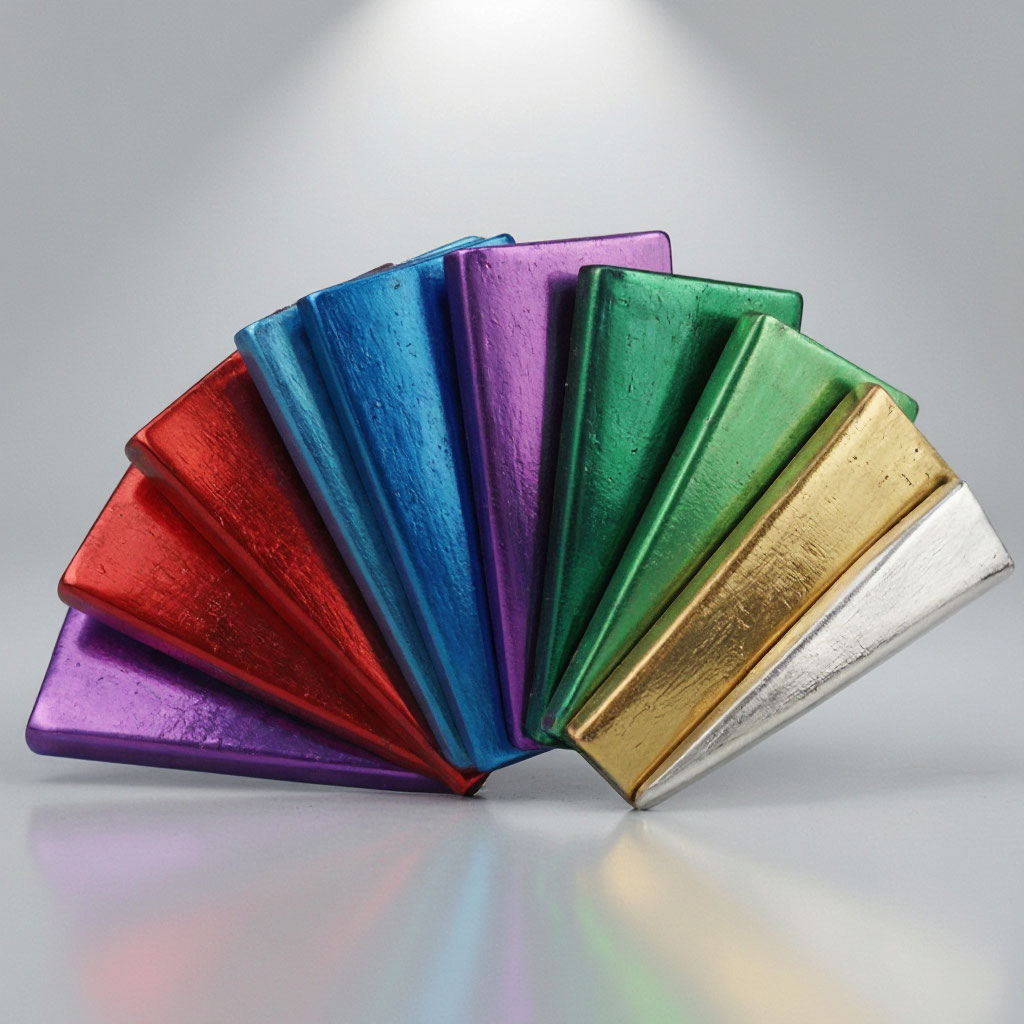
Custom coating is the work that made us want to open Northline in the first place. When Dan and Maria started the shop in 2005, they were both tired of watching small fabricators and designers get pushed to the back of the line by big coaters who only wanted production runs of one color. Two of the very first jobs that came through our door were a set of custom gate frames and a run of motorcycle wheels in a specific RAL grey that no other shop would touch.
Today, custom work is still a significant part of what we do. It ranges from a single prototype part for a furniture designer to a five-hundred-piece run of decorative brackets for a retail fixture manufacturer. What ties it together is that each job gets treated like it matters — because to somebody, it does.
The pretreat, cure schedule, and QC process on a one-off custom job are the same as on our biggest industrial run. There's no "custom line" with a shorter cure or looser tolerances. Custom just means the color, finish, and racking are all figured out specifically for that part — not that the process is any different.
Single parts for design review, trade show displays, or client approval. Same process, same QC — just a run size of one.
Brackets, standards, rails, and display hardware. Short runs in specific brand colors, produced on schedule for store rollouts.
Table bases, chair frames, and architectural furniture components. Color-matched to a designer's palette or an existing product line.
Dimensional letters, sign frames, and mounted plaques. Two-sided coating and specific gloss levels available on request.
Motorcycle frames, roll cages, engine covers, and specialty brackets in candy, vein, or metallic finishes.
Runs from 50 to 500 pieces in a specific color, produced on a recurring schedule for OEMs and integrators.
These are the finish families we work with most often. If you're looking for something that isn't listed, send us a photo — there's a decent chance we can source it or get close.
Transparent tint over a polished or metallic base
Two-stage application. The base coat provides depth and reflection; the candy topcoat adds the color. The most expensive finish we offer because it requires two separate powder applications with a flash cure between them.
Common: candy red, candy blue, candy copper, candy greenTextured, webbed surface pattern
Created by a chemical reaction during cure that produces a network of lighter-colored veins across the surface. Popular on industrial furniture, toolboxes, and equipment where a plain color would show every fingerprint and scratch.
Common: black vein, silver vein, copper veinDimpled, hammered-metal appearance
Simulates the look of hand-hammered metal without any actual hammering. Excellent at hiding surface irregularities and weld marks. Common on vintage-style equipment, fixtures, and automotive restoration.
Common: black, silver, bronze, gunmetalRough, leather-like surface texture
Originally developed for military and industrial equipment. Extremely durable and hides wear better than any smooth finish. Common on power tools, engine covers, and heavy-duty brackets.
Common: black, grey, olive drabColor that changes with viewing angle
Mica or pearlescent pigments suspended in a clear or tinted base. The color shifts depending on light angle — purple-to-green, blue-to-purple, and other combinations. Popular for accents, automotive trim, and specialty design work.
Common: purple/green shift, blue/purple shiftFine metallic flake in a colored or clear base
Depth and shimmer without full color-shift. Metallic finishes read as more expensive than flat colors on automotive and furniture work. Available in coarse, medium, and fine flake sizes.
Common: gunmetal, bronze, titanium, copperColor matching is where a lot of custom work either succeeds or turns into a nightmare. Our process is designed to be predictable: we tell you upfront what we can match exactly, what we can get close to, and what we can't do.
We'll always send a physical test panel before running the full job. Nobody wants to find out the color is off after forty parts have been coated.
Start a color match →RAL Classic, RAL Design, Pantone, Federal Standard 595, and most OE automotive codes. Usually matched from stocked powder at no extra charge. Add 1–2 business days.
Send us a part, a chip, or a piece of the material. We'll match it visually and with a spectrophotometer, then send back a test panel for approval. Add 5–7 business days.
For colors that don't exist as a stock powder, we work with our powder suppliers to formulate a custom batch. Add 10–15 business days and a formulation fee. Minimum batch sizes apply.
Photos are unreliable for exact matches — screen calibration, lighting, and shadows all distort color. We'll quote a ballpark match from a photo, but final approval requires a physical test panel.
Color is only half the job. A gloss black and a satin black read completely differently. We'll confirm gloss level (or send a sample at the specified gloss) before running the full job.
For recurring production runs, we hold reserved powder from a single manufacturer batch for the length of the project so every shipment matches the approved sample.
Custom work doesn't have a strict size or quantity range, but there are a few practical constraints worth knowing before you send a drawing.
Four hundred steel brackets for a regional outdoor retailer, matched to their brand color from a physical chip. Two production lots, held to ΔE ≤ 1.5 against the approved sample.
Two-stage candy copper over a metallic silver base. Frame, swing arm, and seventeen brackets all coated in a single batch to keep the color consistent across the build.
Sixty table bases in a custom formulated bronze metallic, matched from the designer's paint chip. Test panel approved before the full run, delivered on schedule for a trade show.
Almost always, but there are limits. RAL, Pantone, and OE codes are straightforward. Physical samples are matched visually and with a spectrophotometer. Metallic and candy finishes are harder to match exactly because the pigment orientation affects the final appearance — we'll always recommend a test panel first. For colors that don't exist as a stock powder, we can have a custom batch formulated, with 10–15 business days of lead time.
One piece. There's no hard minimum. In practice, jobs under $150 in total value usually aren't economical once setup, masking, and rack space are factored in — but we'll always quote honestly and tell you if a small job doesn't make financial sense for either of us.
Standard color matches (RAL, Pantone, OE codes) are included at no extra charge as long as the powder is available from stock. Physical sample matches add a small setup fee for a test panel. Custom formulated powders carry a formulation fee and typically a minimum batch quantity — we'll tell you the exact number before you commit.
Yes, with limitations. Two-tone work requires masking between color applications and multiple cure cycles, which adds significant time and cost. It works well on parts with clean separation lines — think a frame where the main body is one color and a specific detail panel is another. Complex multi-color work usually isn't cost-effective unless the design justifies it.
Consistency depends on film thickness of the topcoat. Candy is transparent, so small thickness variations change the final color. We control this by applying a consistent topcoat build across all parts in a batch and running the whole job in one continuous session. For long production runs, we recommend splitting into batches and running each batch in one sitting.
Not reliably. Old paint, powder, or chrome will fail from the substrate up and pull the new finish with it. We strip existing finishes by chemical, blast, or burn-off before coating. If you're doing a custom job over an old part, expect a strip-and-prep charge in the quote.
Standard custom work with a stock color runs 4–7 business days. Physical sample matching adds 5–7 days for the test panel cycle. Custom formulated powder adds 10–15 days. We'll give you a firm ship date on the quote — not a range — once we've seen the parts and know the finish.
Custom work is warranted against adhesion failure and coating defects for 12 months, same as our standard production work. UV stability and color retention depend on the specific powder — we can advise on that during quoting, but it isn't covered by the general warranty unless the specific powder carries a manufacturer's warranty.
Most custom quotes can be built from a photo of the part, a description of the finish you want, and a quantity. Send it over and we'll come back with a firm number, a lead time, and an honest opinion on whether the finish will do what you're expecting.