Machine frames for a Grand Rapids automation integrator
Forty-two epoxy-coated weldments ranging from 4 ft to 18 ft, spec'd to 4-mil film build. Racked, blasted, phosphate pretreated, and coated within a single production week.
Epoxy, hybrid, and heavy-build polyester systems for heavy equipment, structural steel, production frames, and infrastructure components. Engineered for chemical exposure, abrasion, and the reality that recoating means downtime you don't have.
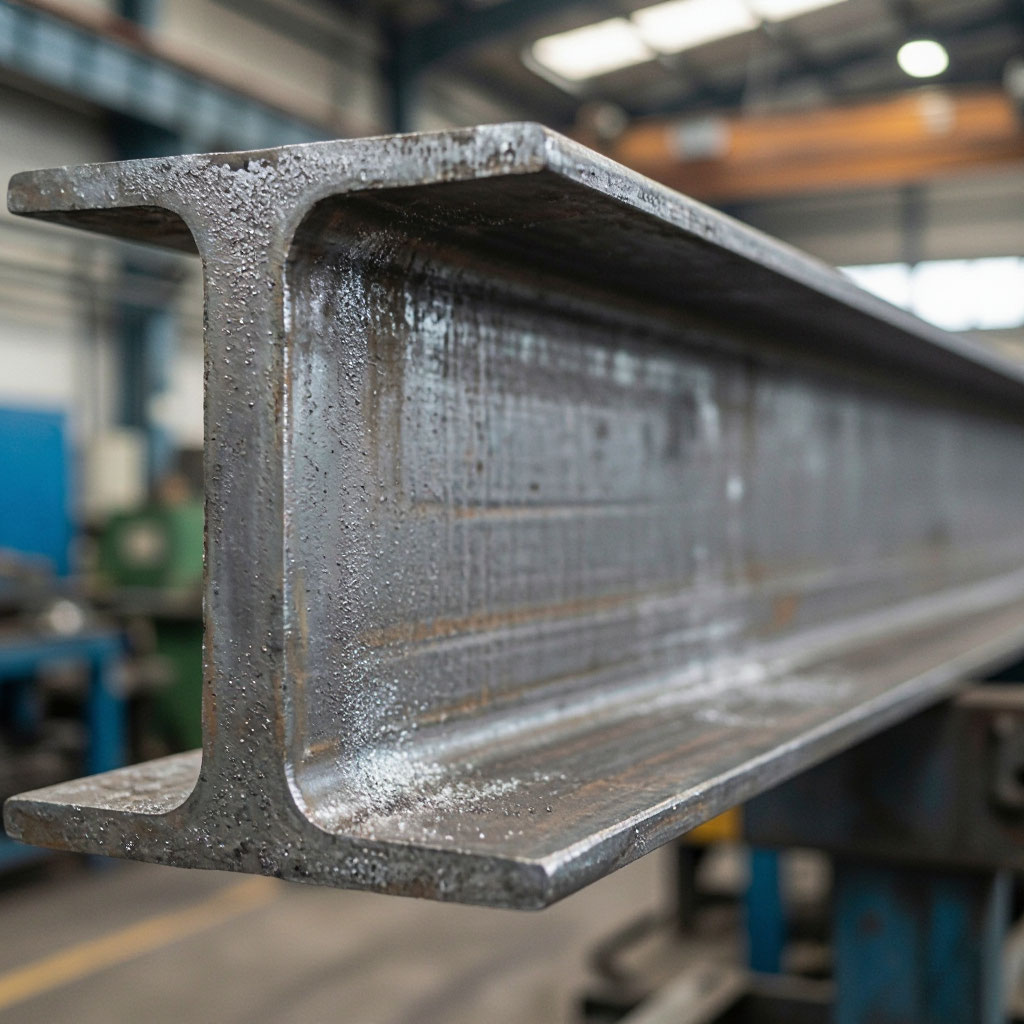
Industrial powder coating is not a cosmetic finish. It's the thing that decides whether a frame survives a decade of washdown chemicals, whether a production line keeps running through a Midwest winter, or whether a piece of equipment can be serviced in place instead of shipped back to a shop.
We build industrial coating systems around three questions: what is the part exposed to, how long does it need to last, and what happens if it fails. From there we select the chemistry, thickness, and pretreatment that will actually do the job — not the cheapest line item on a spec sheet.
The bulk of our industrial work is epoxy and hybrid systems for interior service, and TGIC polyester for anything that lives outdoors. For extreme environments — chemical plants, food processing, coastal installations — we can specify heavy-build systems up to 15 mil with two-coat primer-and-topcoat configurations.
Beams, columns, brackets, gusset plates, and connection hardware. Coated for both interior warehouse service and exterior exposure.
Weldments, castings, and fabrications up to 24 feet. Coatings resist cutting fluids, hydraulic oil, and coolant carry-over.
Electrical cabinets, control panels, and housings. Where required, we coat with low-temperature powders on pre-assembled units.
Racks, carts, conveyor frames, pallet jacks, and shelving. High-abuse finishes that survive contact with forks and edges.
Hangers, saddles, brackets, and clamps. Frequently spec'd with UV-stable polyester for exterior plant installations.
One-off weldments and small-batch production runs. If you can draw it, we can rack it — subject to the size limits below.
Every industrial job is quoted against the same technical framework. If your part doesn't fit within these limits, call us — there's a good chance we can still run it, but we'd rather tell you upfront than after you ship it.
Best for: interior service, chemical exposure, under-hood, washdown
Maximum chemical and corrosion resistance. Excellent adhesion to blasted carbon steel. Not UV-stable — will chalk and fade in direct sunlight, so we don't spec it for exterior parts unless it's topcoated.
Best for: furniture, shelving, light industrial, interior architecture
The middle ground. Better UV stability than pure epoxy with most of the chemical and corrosion resistance intact. The workhorse system for interior industrial and contract furniture work where you need durability without a heavy-build epoxy cost.
Best for: exterior equipment, agricultural, infrastructure, anything outdoors
UV-stable, chip-resistant, and available in thousands of colors. The default spec for anything that lives outdoors and needs to hold color across years of sun and weather. Thicker film build than hybrid, comparable chemical resistance to epoxy in most applications.
Best for: chemical plants, food processing, coastal, extreme environments
Primer plus topcoat systems for applications where a single coat isn't enough. We use a zinc-rich or epoxy primer for maximum adhesion and corrosion protection, then a polyester or epoxy topcoat for the finish. Film builds up to 15 mil total.
Roughly sixty percent of our production volume is industrial coating. The work comes from five sectors, each with its own set of coating challenges and abuse patterns.
All industries →Implements, trailers, chassis, and hitch assemblies. UV-stable polyester for outdoor service with occasional chemical exposure from fertilizers and diesel.
Steel frames, embeds, connectors, and hardware. Coated for warehouse staging and long-term exterior exposure.
Machine bases, gantry frames, and tooling plates. Epoxy systems for cutting fluid and coolant resistance.
Transformer housings, pole-line hardware, and enclosure components. UV-stable topcoats rated for 20-year exposure.
Washdown-rated systems with high chemical resistance. Coatings compatible with caustic and acidic sanitation chemicals.
Forty-two epoxy-coated weldments ranging from 4 ft to 18 ft, spec'd to 4-mil film build. Racked, blasted, phosphate pretreated, and coated within a single production week.
Over 1,200 individual pieces of connection hardware and column base brackets, TGIC polyester in RAL 7016, salt-spray tested to 1,000 hours before release.
UV-stable polyester topcoat over blasted carbon steel. Ongoing monthly production run of 340 frames, coated and shipped in five-day cycles.
Not reliably. Weld spatter, mill scale, and rust all create adhesion problems that no powder will overcome. We blast the part to white metal or near-white before coating, which is why blasting is built into our industrial quotes by default rather than listed as an option.
For most outdoor applications we spec a TGIC polyester at 3–4 mil over a blasted and phosphate-pretreated substrate. If there's significant chemical exposure, saltwater, or expected service life beyond 10 years, upgrade to a two-coat epoxy-primer / polyester-topcoat system at 6–8 mil total. Send us the application details and we'll recommend a specific system.
Our ovens handle up to 24 feet in the longest dimension. For parts that exceed that — long beams, large weldments, or oversized fabrications — we can sometimes run them in segments and assemble after coating, or we'll refer you to a shop with a larger oven. We'd rather turn the job down than ship something that doesn't cure properly.
Yes. Masking is included in every quote. We use high-temperature silicone plugs, caps, and tape that survive the cure cycle without leaving residue. If you need tight tolerances on a masked surface, tell us in the RFQ — we may need to leave additional build tolerance around the mask edge.
No minimum, but for production-spec industrial parts the cost-per-piece drops fast as quantity rises. Setup, racking, masking, and cure all have fixed overhead. Send us your annual volume estimate and we'll quote both one-off and production pricing so you can see the curve.
Yes. We ship on LTL, dedicated flatbed, or customer-arranged freight depending on the parts. For recurring production runs we're happy to work with your existing logistics provider to keep inbound and outbound on the same schedule as your assembly line.
For jobs that require it, we provide certificates of conformance with batch numbers, film thickness readings, cure logs, and test results. We're not currently certified for ITAR or DFARS work, but we regularly supply the documentation that OEMs and prime contractors require from their coating suppliers.
Industrial work lives and dies on details. Send us the part geometry, substrate, exposure conditions, and any spec you're working against — we'll come back with a specific recommendation and a firm quote.